
 Bottle Coolers & Beer Fridges
 Ice Cream Displays
 Ice Cream Machines
 Chest Freezers
 Commercial Freezers
 Commercial Fridges
 Ice Cube Makers and Flakers
 Wine Coolers
 Bain Maries
 Commercial Microwaves
 Commercial Sinks
 Commercial Ovens
 Fryers and Chip Scuttles
 Glass and Dishwashers
 Pie Warmers & Hot Food Displays
 Pizza Ovens
 Water Boilers
 Bar Supplies
 Bowls & Display Baskets
 Cash Registers
 Chafing Dish Sets & Fuel
 Menus & Boards
 Table Numbers & Stands
 Salt, Pepper & Spice Mills
 Crockery
 Cutlery
 Glassware
 Wine Glasses
 Bins
Bins Cleaning Chemicals
 GreasePak
 Janitorial Equipment
 Laundry Equipment
 Coffee Machines
 Juice Dispensers
 Juicers
 Drink Blenders
 Milkshake Blenders
 Slush Machines
 Water Boilers
 Cookware
 Gastronorm Containers
 Ingredient Bins
 Pastry & Baking
 Utensils
 Pizza Pans & Equipment
 Food Storage
 Food Transport & Delivery Bags
 Folding Furniture
 Garden and Outdoor Furniture
 High Chairs
 Chairs
 Tables
Drop In Units
Commercial Drop In Units are the ultimate space-saving solution for UK restaurants, hotels, and catering businesses seeking sleek, built-in food display and storage options. These versatile units seamlessly integrate into your countertops and serving areas, creating a professional finish while maximizing your workflow. With both hot and cold options available, these units maintain perfect serving temperatures from 30°C to 90°C for hot food or a crisp 2°C to 10°C for chilled items. After 50 years in the business, we've seen how these units transform serving stations when paired with commercial counters and servery equipment for a cohesive, efficient food service setup.
Shop By
-
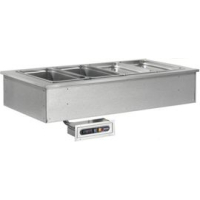 £1,786.99 £2,680.17
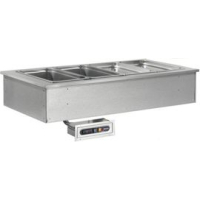
Heated Bain Marie Dry Well Drop In Unit | Commercial Food Warmer | 3 x GN1/1 Capacity | Afinox ORANGE-3
290H x 1169W x 650D mm
Single Phase
 £1,786.99 £2,680.17
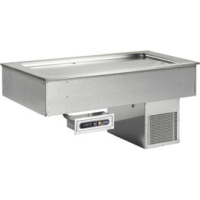
Heated Bain Marie Wet Well | Drop In Unit | 2 x GN1/1 Capacity | Afinox RED-2
290H x 844W x 650D mm
Single Phase
 £1,920.99 £2,881.02
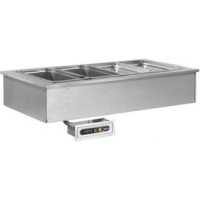
Commercial Cold Plate Drop In Unit | Static Refrigeration | 2 x GN1/1 Capacity | Afinox LIME-2
565H x 844W x 650D mm
Single Phase
 £1,931.99 £2,898.27
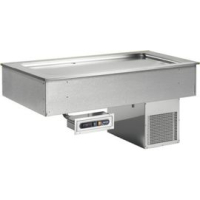
Heated Bain Marie Dry Well Drop In Unit | Commercial Food Warmer | 4 x GN1/1 Capacity | Afinox ORANGE-4
290H x 1494W x 650D mm
Single Phase
 £1,998.99 £2,998.71
Cold Plate Drop In Unit | Static Refrigerated Display | 3 x GN1/1 Capacity | Afinox LIME-3
565H x 1169W x 650D mm
Single Phase
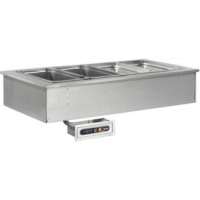 £2,009.99 £3,014.49
Heated Bain Marie | Wet Well Drop In Unit | 3 x GN1/1 Capacity | Afinox RED-3
290H x 1169W x 650D mm
Single Phase
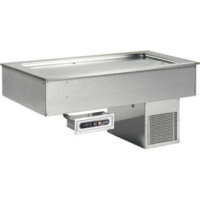 £2,132.99 £3,199.59
Static Cold Plate Drop In Unit | Commercial Refrigerated Display | 4 x GN1/1 | Afinox LIME-4
565H x 1494W x 650D mm
Single Phase
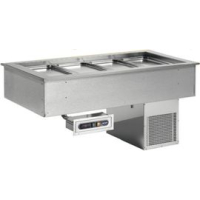 £2,143.99 £3,215.37
Commercial Cold Well Drop In Unit | Static Refrigerated Display | 2 x GN1/1 Capacity | Afinox GREEN-2
565H x 844W x 650D mm
Single Phase
🎯 Need Help Choosing the Right Drop In Units?
Discover how to choose the right model with expert advice on buying considerations, kitchen-tested usage tips, frequently asked questions and real-world chef insights below.
🎧 On the go? Listen to our expert podcast instead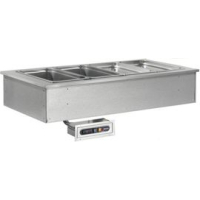 £2,221.99 £3,333.00
Commercial Heated Bain Marie | Wet Well Drop In Unit | 4 x GN1/1 Capacity | Afinox RED-4
290H x 1494W x 650D mm
Single Phase
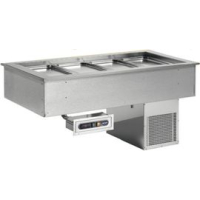 £2,221.99 £3,333.00
Commercial Cold Well Drop In Unit | Static Cooling Well | 3 x GN1/1 Capacity | Afinox GREEN-3
565H x 1169W x 650D mm
Single Phase
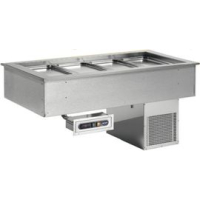 £2,366.99 £3,551.10
Commercial Static Cold Well | Drop In Refrigeration Unit | 4 x GN1/1 Capacity | Afinox GREEN-4
565H x 1494W x 650D mm
Single Phase
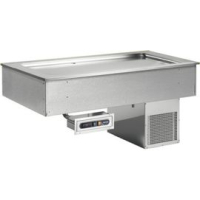 £2,394.99 £3,592.71
Cold Plate Drop In Unit | Static Refrigeration | 5 x GN1/1 Capacity | Afinox SOUL LIME-5
375H x 1819W x 650D mm
Single Phase
temp +4C to +8C
R290 efficient gas
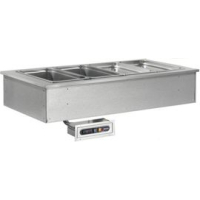 £2,478.99 £3,718.98
Commercial Heated Bain Marie | Wet Well Drop In Unit | 5 x GN1/1 | Afinox RED-5
290H x 1819W x 650D mm
Single Phase
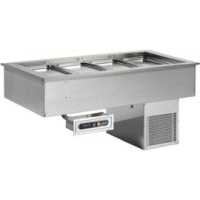 £2,668.99 £4,003.02
Commercial Cold Well Drop In Unit | Static Refrigerated Display | 5 x GN1/1 | Afinox GREEN-5
565H x 1819W x 650D mm
Single Phase
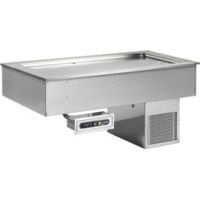 £2,668.99 £4,003.02
Cold Plate Drop In Unit | Static Refrigeration | 6 x GN1/1 Capacity | Afinox LIME-6
565H x 2144W x 650D mm
Single Phase
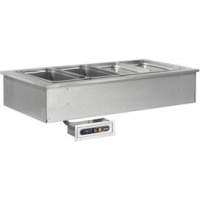 £2,835.99 £4,254.12
Heated Bain Marie Wet Well Drop In Unit | Hot Food Display | 6 x GN1/1 Capacity | Afinox RED-6
290H x 2144W x 650D mm
Single Phase
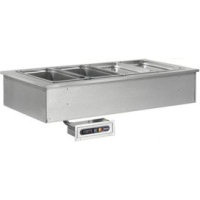 £2,840.99 £4,261.29
Heated Bain Marie Dry Well Drop In Unit | Commercial Hot Food Warmer | 2 x GN1/1 Capacity | Afinox ORANGE-2
290H x 844W x 650D mm
Single Phase
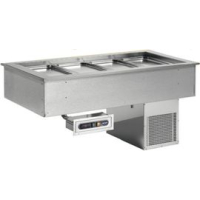 £2,847.99 £4,271.37
Commercial Static Cold Well | Drop In Refrigeration Unit | 6 x GN1/1 Capacity | Afinox GREEN-6
565H x 2144W x 650D mm
Single Phase
 £3,707.99 £5,562.66
Ventilated Cold Well Drop In Unit | Food Display Chiller | 2 x GN1/1 Capacity | Afinox BLUE-2
705H x 844W x 760D mm
Single Phase
 £3,897.99 £5,846.73
Ventilated Cold Well Drop In Unit | Commercial Food Display | 3 x GN1/1 Capacity | Afinox BLUE-3
730H x 1169W x 760D mm
Single Phase
 £4,230.99 £6,346.02
Ventilated Cold Well Drop In Unit | Commercial Food Display Chiller | 4 x GN1/1 Capacity | Afinox BLUE-4
730H x 1494W x 760D mm
Single Phase
 £5,023.99 £7,535.49
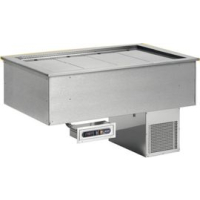
Ventilated Cold Well Drop In Unit | Commercial Refrigerated Display | 5 x GN1/1 Capacity | Afinox BLUE-5
730H x 1819W x 760D mm
Single Phase
 £5,848.99 £8,773.71
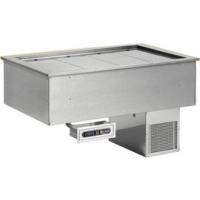
Ventilated Cold Well Drop In Unit | GN1/1 Refrigerated Display | 6 Container Capacity | Afinox BLUE-6
730H x 2144W x 760D mm
Single Phase
 £7,170.99 £10,756.59
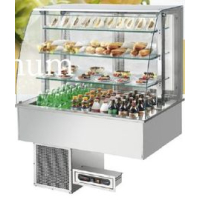
Commercial Ventilated Cold Drop In Glass Display | Refrigerated Food Display | 3 x GN1/1 Capacity | Afinox PLATINUM-3
1505H x 1169W x 760D mm
Single Phase
 £8,085.99 £12,129.66
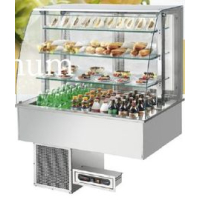
Ventilated Cold Drop in Glass Display | Commercial Refrigerated Counter Display | 4 x GN1/1 Capacity | Afinox PLATINUM-4
1505H x 1494W x 760D mm
Single Phase
 £9,295.99 £13,944.66
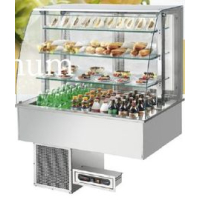
Ventilated Cold Drop In Glass Display | Commercial Food Display Counter | 5 x GN1/1 Capacity | Afinox PLATINUM-5
1505H x 1819W x 760D mm
Single Phase
Commercial Drop In Units for Restaurants & Catering Businesses
Explore More About Drop In Units
Get expert guidance, see real chef stories, and find answers to your most common questions.
Brands Trusted by Industry Professionals
Key Features and Benefits
- Temperature Control Precise settings from 30-90°C for hot units or 2-10°C for cold—perfect food safety.
- Versatile Applications Suitable for buffets, carveries, and à la carte service—maximum flexibility.
- Durable Construction Built from food-grade stainless steel—stands up to daily commercial use.
- Energy Efficient Modern insulation and smart controls—keeps running costs down.
- Attractive Presentation Sleek integration with countertops—enhances your servery area.
- Easy Installation Simple drop-in design—fits standard counter cut-outs.
- Increased Service Speed Food ready to serve at correct temperature—keeps queues moving.
- Effortless Cleaning Smooth surfaces and removable parts—maintains hygiene standards easily.
Too busy to read? Listen instead.
In this episode of The Deep Dive, we unpack everything about drop-in units—chilled, heated, and ambient. Learn how these space-saving solutions enhance food presentation, improve service efficiency, and fit seamlessly into your countertop layout.
14.07min | Expert-led | Real-world advice
Read Full Podcast Transcript: "Drop In Units" 0:00: OK, let's unpack this.
0:01: We're doing a deep dive into something really specific today, but actually, incredibly practical, vital kit for loads of businesses, commercial drop-in units.
0:12: Yeah, absolutely, and these aren't, you know, the big freestanding ovens or mixers you might picture first.
0:17: No, exactly.
0:18: Think more built in integrated solutions for displaying food, storing it that just fit right into countertops, serving areas.
0:27: Makes everything look really seamless and our source material for this, it's basically a collection of excerpts from a UK catering equipment website, right, so we've got product details, some insights from people who actually work with this stuff daily.
0:41: And you know, solid practical advice.
0:44: So the goal is pretty clear, I think.
0:46: We want to cut through the specs, understand what these drop-in units actually are.
0:49: Yeah, why they matter so much for places like restaurants, hotels, cafeterias.
0:54: Explore the different kinds you can get and figure out the key things you'd need to consider if you were looking at getting them.
1:00: Exactly, just getting you informed quickly and thoroughly on this, well, pretty essential piece of the catering world.
1:07: OK, so starting right at the basics then.
1:10: What are commercial drop-in units?
1:14: The name gives a big clue, doesn't it?
1:15: It really does.
1:16: The core idea is, like you said, exactly what it sounds like.
1:19: They're literally designed to drop in to a pre-cut hole in a countertop or maybe a servey station.
1:25: OK, so they're not sitting on the counter, they become part of it.
1:27: Precisely.
1:28: The rim of the unit rests on the.
1:30: surface, giving it that clean, flush finish, while the main body, all the workings, hangs underneath.
1:36: And their main job, it's fundamental for food service, isn't it?
1:39: Keeping food at the absolute perfect serving temperature, hot or cold.
1:43: And the source material jumps straight into those two main types, which makes total sense.
1:47: Units for hot food, units for cold food.
1:49: Yeah.
1:50: The hot units, they're designed to hold safe temperatures, typically somewhere between, say, 30 °C, so quite warm, up to about 90 degrees C, depends on the food, obviously, right?
2:00: And the cold units, they go the other way, keeping things chilled, crisp.
2:04: Usually operating between a cool 2 degree C and maybe 10 degrees C.
2:09: And that precise control, it's just critical, isn't it, for safety, for presentation, especially for stuff that needs keeping cool.
2:17: OK, now this is where it gets really interesting, I think, why these units are more than just, you know, temperature holders.
2:24: The source really pushes the big advantages they offer.
2:28: Why businesses actually invest.
2:30: It starts with the aesthetics, doesn't it?
2:32: They mention professional presentation, you get away from maybe clunky separate bits of kit.
2:38: Yeah, and you get this sleek, integrated, almost high-end feel.
2:42: It just looks much more polished for the customers, and that polished look, it connects directly to operational efficiency.
2:48: When the food is held right there at the perfect temperature.
2:51: It just speeds up service massively.
2:53: You're not fetching things, waiting for stuff to heat up somewhere else.
2:57: The source even mentions hot units can be ready in like.
3:00: 30 minutes.
3:00: Yeah, just 30 minutes from switching on.
3:02: That speed just keeps the service flowing, keeps queues down vital during busy periods, and space, always a big issue in commercial kitchens, right?
3:10: These are brilliant for space optimization, definitely because they drop into the counter, they free up.
3:15: That surface area that a free-standing unit, which is hog, you maximize your workspace.
3:20: And we mentioned it, but the precise temperature control is a huge plus.
3:24: Being able to set specific temperatures in those ranges, 30 to 90, hot, 2 to 10 cold, That's, well, it's non-negotiable for food safety standards and quality.
3:35: Durability is another one they highlight.
3:37: They're typically built from food grade stainless steel, specifically designed to take the knocks of daily commercial use, and they estimate what, 7 to 10 years lifespan for good ones?
3:47: Yeah, with proper care, so it's a solid long-term investment, and they've got smarter too, haven't they?
3:52: Better insulation, clever controls, leads to better energy efficiency, lower running costs.
3:58: The source actually makes a specific claim, says integrated units can use around 15% less energy compared to older freestanding alternatives.
4:05: 15%.
4:06: That really adds up over the years on the bills.
4:09: And finally, really important for staff, easy installation and cleaning.
4:12: Yeah, the drop-in design fits standard cutouts, assuming you get the right cutout.
4:16: Right.
4:17: Measure twice, cut once.
4:19: Exactly.
4:20: And features like smooth surfaces, fewer nooks and crannies, often removable parts.
4:24: It just makes cleaning much faster, much more effective, and that's huge for hygiene.
4:30: OK, so if we dig into the variety then, looking at the product lists and descriptions in the source.
4:35: Yeah.
4:36: You see just how many options there are tailored to different needs.
4:39: Absolutely.
4:40: Let's start with the heated units, often called banin Mary.
4:43: Now the source differentiates between dry well and wet well options.
4:47: Well, Bain Marie, that's the classic water bath thing, right?
4:50: How does that work in these units?
4:52: Pretty much.
4:53: A wet well bain-marie uses water, creates steam for gentle heat just like the traditional method.
4:59: So obviously it needs a water connection.
5:01: Dry well units, though, they use electric heating elements directly, no water needed, so simpler to install if plumbing access is tricky.
5:09: , right.
5:10: And the source says wet heat is good for keeping food moist.
5:13: Yeah, well, dry heat gives you quick versatile heating, depends what you need.
5:17: Got it.
5:17: Then you've got the refrigerated units, often called cold plate or cold well types.
5:22: And the source mentions both static and ventilated cooling for these.
5:26: What's the difference there?
5:27: Static cooling is the simpler one.
5:29: It uses a cold surface or element, chills the air directly above it, like a cold shelf, basically.
5:35: Right.
5:36: Ventilated cooling uses fans to push cold air around the whole well.
5:40: Gives more even cooling, but Sometimes it can dry out uncovered food a bit if you're not careful.
5:45: OK.
5:46: The source also mentions something called eutectic cooling systems.
5:50: Sounds a bit technical.
5:51: It does, yeah.
5:52: It's basically a system using special sealed plates.
5:55: They contain a solution that freezes or gets really cold when the unit's plugged in, maybe overnight.
6:01: Then when you unplug it, those plates hold the cold temperature for hours without needing constant power.
6:07: The source notes this is really handy for mobile catering, where you might not have power readily available.
6:12: That makes sense.
6:13: And I saw some units specifically called out as display units, designed with presentation front and center.
6:19: Often have features you'd expect on a buffet line, like sneeze guards to keep things hygienic, and a really key point for capacity, they standardize using gastronome sizes, GN sizes.
6:31: , GN sizes.
6:32: For anyone not familiar, what does that mean practically?
6:35: Think of them as standard pan sizes.
6:37: They fit across different bits of pro kitchen kit ovens, fridges, and these drop-ins.
6:42: The standard full size is 11 GN, OK.
6:45: The source says these units come in sizes from a small 12 GN right up to a pretty big 6 GN capacity.
6:52: The listings show common setups like space for 211 GN pans, or 345, even 6 side by side in the booger units.
7:00: So choosing the right capacity is crucial then, matching it to how much food you need out during service.
7:04: Absolutely vital, avoids you constantly running back to the kitchen to top things up.
7:08: And beyond the heating or cooling type and the size, the listings show loads of other variations, don't they?
7:13: Definitely things like whether the base under the well is just ambient temperature or maybe even heated perhaps for warming plates.
7:19: Oh, different heights, widths, depths, tailoring them to specific counter designs, and of course different power requirements, right?
7:26: And you mentioned that from a standard 13A plug, yeah, like a normal wall socket up to a much goofier 32A supply which probably needs its own dedicated circuit.
7:37: They mentioned single-phase power, which is standard for most UK commercial places, not the big three-phase power you get with massive industrial kit.
7:45: What's really fascinating though is the versatility.
7:48: The source points out you can actually put different types of drop-ins into one counter.
7:52: Yeah, you could have a cold well right next to a hot Bain Marie, as long as you've got proper insulation between them, obviously, don't want the heat messing with the cold or wasting energy.
8:01: So who's actually using these?
8:02: Where do you see the most?
8:04: The source breaks down the typical users and gives a nice example too.
8:07: Yeah, it lists the main players, restaurants using them maybe to keep sauces or sides ready for faster plating, streamlining things.
8:15: Hotels, big users, especially for buffets, breakfast service where you need volume, long holding times, and good presentation.
8:22: Definitely cafeterias too, high volume self-service lines, food needs to be safe and easy to get to, and catering companies, they love the modular aspect, right?
8:31: Build custom set.
8:32: Quickly at different events.
8:34: Exactly.
8:34: And the real world example they give, it really brings it home.
8:37: It's about this busy hotel in Norwich.
8:39: What was their setup like before?
8:41: Sounds like a bit of a mishmash.
8:43: Older freestanding kit for their breakfast buffet, a bit clunky, apparently hard to keep clean around.
8:48: Yeah, sounds familiar for busy places.
8:50: So what do they do?
8:51: They put in 6 new drop-in units into their existing counter, a mix some refrigerated for things like cereals, fruit.
9:01: And some hot Bain Mary's next to the toaster for the cooked breakfast items.
9:05: And the results.
9:06: What difference did it make?
9:07: Huge difference, according to the head chef, called it a game changer.
9:11: Service got much smoother.
9:13: Everything was just there, ready at temperature.
9:16: Cleaning time was apparently halved, which is massive for staff workload.
9:21: And guests noticed they commented on how much more professional it looked, and the killer detail.
9:27: Breakfast satisfaction scores from guests went up by 30% after the change.
9:31: 30%.
9:32: That's huge.
9:33: Shows it's not just about the kitchen.
9:34: It genuinely impacts the customer experience.
9:37: OK, let's.
9:38: To the practical stuff then.
9:39: What do you need to think about if you're considering buying these or just using them day to day?
9:44: Some important points here.
9:45: The source gives some solid buying considerations.
9:47: Number one, absolutely top of the list, size and capacity.
9:51: Cannot stress it enough.
9:53: Measure your counter space.
9:55: Carefully, not just the top, right, the depth underneath, exactly where the unit actually hangs and match the capacity, those GN sizes to your real service volume.
10:06: Don't buy one too small or you'll just be refilling constantly.
10:10: And then the technical requirements we touched on power, is it a simple 13A plug or do you need that 32A wiring?
10:16: Yeah, and if you go for a wet heat.
10:18: Vein marine, you've got a factor in the water connection, maybe drainage too, and ventilation, especially for the refrigerated ones.
10:24: They need airflow underneath to work properly, stop overheating.
10:27: And installation itself needs planning.
10:30: You need that whole cut precisely in the counter.
10:32: Suppliers usually provide templates, thankfully, and the source does say they can go into existing counters, but you have to check the structure underneath, make sure there's space.
10:40: Right.
10:41: Once they're in, what about using and maintaining them?
10:44: Any key tips?
10:45: Yeah, a few good ones.
10:46: For hot units, preheat for at least 30 minutes before service starts, gets the well up to temperature evenly.
10:53: Makes sense.
10:54: And for cold ones.
10:54: Give them time to cool down properly before you load food in, usually 2 to 3 hours, especially from a cold start, and always use the right size GN containers, the ones that fit snugly, better temperature holding, more efficient.
11:07: Good tip.
11:08: And if it's self-service, Like that hotel, sneeze guards are important.
11:13: Yep, some come with them, or you can add them.
11:15: And another simple one, use lids or covers on the pans, especially when it's quieter, holds the temperature better, saves energy.
11:23: The source also includes some vital safety guidelines.
11:26: This isn't just nice to have advice, is it?
11:28: No, it's crucial.
11:29: Protecting food, protecting staff.
11:31: They suggest regular checks, seals, heating elements, maybe monthly, and monitoring the actual food temperature during service.
11:38: Hourly checks, non-negotiable.
11:40: Make sure it's staying in the safe zones.
11:42: Don't overload the units either.
11:44: Use proper handling gear, heat protection for hot pans.
11:47: Follow the right shutdown steps at the end of the day.
11:50: Keep electrics dry and secure.
11:52: Basic stuff, but essential.
11:54: And cleaning.
11:55: What's involved there?
11:56: For refrigerated units.
11:58: Empty them out, wipe everything down with FoodSafe sanitizer.
12:02: Cleaning the condenser coils monthly helps efficiency.
12:06: Wet well Bay Marys often have drain taps to make emptying the water easier.
12:10: OK, good practical stuff.
12:11: Let's wrap this up by bringing in those expert insights from the source.
12:15: Yeah, Oliver Bennett, he's quoted calling them a game changer for streamlining service, says they help you serve faster, smarter, without sacrificing quality.
12:23: And he mentions the energy efficiency saving money on bills.
12:26: And Mark, the guy with 5 decades of experience.
12:29: He really focuses on the integration aspect, calls it brilliant, creates that seamless serving area, looks pro, keeps food right, and crucially doesn't eat up valuable counter space.
12:40: They sum up the pros and cons pretty neatly then.
12:42: Pros, space saving, professional look, temperature accuracy.
12:47: Efficiency.
12:48: And the main con they flag, it's that initial need for proper counter modifications, reinforces that advice.
12:55: Measure twice, plan carefully before you start cutting holes.
12:59: So that's our deep dive into commercial drop-in units.
13:02: They might just look like, you know, metal boxes in a counter, but they're actually transforming how service areas work, making them more integrated, efficient, better looking, and crucial.
13:12: keeping food safe and at the right temperature.
13:14: Yeah, applicable everywhere from a tiny deli to a massive hotel buffet.
13:18: They really do change the whole flow and feel of a service space.
13:21: So thinking about all those benefits, saving space, energy, smoother service, even boosting customer satisfaction scores, but also that upfront need for counter modification.
13:31: Here's a final thought for you to mull over.
13:33: Go on.
13:34: How might thinking about integrated solutions like these drop-in units challenge how we normally design or upgrade any kind of functional space, not just catering, Maybe retail displays, workspaces, even high-end home kitchens.
13:46: interesting.
13:47: It forces you to think about building the function into the environment itself.
13:51: Rather than just putting equipment on top of it.
13:54: A different way of thinking about design maybe.
13:56: That's a great point.
13:57: Shifts the perspective from just adding kit to integrating functionality right into the core design.
14:03: Well, thanks for joining us for this deep dive into commercial drop-in units.
Essential Buying Considerations
Size and Capacity
- Measure your counter space carefully—standard sizes range from 1/2 to 6 GN.
- Consider depth requirements—both visible and under-counter space needed.
- Match capacity to your average service volume—undersizing causes constant refills.
Technical Requirements
- Check power specifications—most require 13A-32A electrical supply.
- Consider water connections for wet heat bain maries.
- Plan for ventilation space—especially for refrigerated drop ins.
How Commercial Drop In Units Work
Drop in units work on a brilliantly simple principle: they're designed to 'drop in' to a pre-cut hole in your countertop or servery station, creating a flush, integrated look. The units sit perfectly with their rims resting on the surface, while the bulk of the unit hangs below. Depending on whether you've opted for hot or cold models, they use either heating elements to maintain safe food temperatures (typically 65-90°C for hot food) or refrigeration systems to keep items properly chilled (2-10°C). Most units connect to standard electrical supplies, while some refrigerated models use innovative eutectic cooling systems—perfect for mobile catering where power sources might be limited.

Trusted Insights from Oliver Bennett

Commercial Catering Equipment Specialist
12+ years experience
"Drop-in units are a game-changer for streamlining service—whether you're keeping food hot or cold, they help you serve faster and smarter without sacrificing quality. Choose energy-efficient models and you’ll save on bills while keeping your kitchen running like clockwork."Safety Guidelines
- Regular Inspections Check seals and heating elements monthly—prevents failures.
- Temperature Monitoring Verify food temperatures hourly during service—ensures food safety.
- Avoid Overloading Respect maximum capacity guidelines—maintains proper airflow.
- Heat Protection Use proper handling equipment—prevents burns.
- Proper Shutdown Follow correct shutdown procedures—extends equipment life.
- Electrical Safety Keep connections dry and secure—prevents electrical hazards.
Top Tips for Using Commercial Drop In Units
For optimal performance, preheat hot units for at least 30 minutes before service—this ensures even temperature distribution. For refrigerated units, allow 2-3 hours cooling time before loading food. Use gastronorm containers that match your unit dimensions for a perfect fit, and consider a countertop sneeze guard for open-access units in self-service areas. Always use the right lids and covers when not actively serving to maintain temperatures and reduce energy consumption during quieter periods.
Benefits of Using Commercial Drop In Units
- Professional Presentation Creates integrated, high-end look—impresses customers.
- Operational Efficiency Food ready at serving temperature—speeds up service.
- Space Optimization Maximizes counter use—perfect for tight kitchens.
Did You Know?
- Speed Hot units reach serving temperature in just 30 minutes—quicker than bains.
- Durability Quality models last 7-10 years in commercial settings—solid investment.
- Versatility One countertop can house multiple drop-in types—custom configurations.
- Savings Integrated units use 15% less energy than freestanding alternatives.




Expert Insights on Commercial Drop In Units
After five decades of supplying commercial kitchens, we've learned what makes a quality drop in unit. 'The integration aspect is what makes these units brilliant,' notes Mark, our equipment specialist. 'They create a seamless serving area that looks professional while keeping food at perfect serving temperature without taking up valuable counter space.'
- Pros: Space-saving, professional appearance, temperature precision.
- Cons: Requires proper counter modifications—measure twice.
Who Needs Commercial Drop In Units?
- Restaurants Perfect for creating efficient serving stations—streamlines plating.
- Hotels Ideal for buffet and breakfast service—elegant presentation.
- Cafeterias Essential for high-volume self-service—keeps service moving.
- Catering Companies Modular solution for custom servery setups—adapts to venues.
Real-World Success with Commercial Drop In Units
A bustling hotel in Norwich recently upgraded their breakfast buffet with integrated drop in units. Before, they struggled with clunky freestanding equipment that looked messy and took ages to clean around. After installing six of our drop in units—a mix of refrigerated cereal displays and hot bain maries alongside their toaster station—everything changed. 'The transformation was brilliant,' their head chef told us. 'Service is smoother, cleaning time's halved, and guests comment on how professional it looks now. Breakfast satisfaction scores are up 30%!'

FAQs
- What's the standard size for commercial drop in units? Common sizes follow gastronorm standards—1/1, 2/3, and 1/2 GN being most popular.
- How do I clean refrigerated drop in units? Remove food containers, wipe surfaces with food-safe sanitizer, and clean condensers monthly.
- Can drop in units be installed in existing counters? Yes, with proper measurements and cut-outs—we provide installation templates.
- Do hot drop in units need water connections? Wet heat models do; dry heat units are electric-only for simpler installation.
- How long do commercial drop in units last? Quality units typically last 7-10 years with proper maintenance and care.
- Can I mix hot and cold drop ins in one counter? Absolutely—just ensure proper insulation between units for energy efficiency.
Looking for Equipment by Business Type?
Not sure where to start? Whether you're running a bustling café, opening a pizzeria, or managing a school canteen, we've made it easy to shop by business type. Explore handpicked equipment bundles and essentials tailored to your industry—saving you time and making sure you get exactly what you need.
Other Categories You Might Find Useful
We’ve selected some closely related categories that might be essential for your setup. Whether you’re expanding your kitchen or just making sure you’ve got everything covered, these links will help you explore more equipment that fits your needs.
Commercial Refrigerated Buffet Displays for Restaurants & Catering Commercial Dishwashers for Restaurants & Catering Commercial Food & Dough Mixers for Bakeries & Restaurants Commercial Cooking Thermometers for Kitchens & Catering Commercial Kitchen Worktops & Preparation Tables for Restaurants Commercial Kitchen Utensils for Restaurants & Catering Commercial Vegetable Cutters & Prep Machines for Restaurants & Catering Commercial Vacuum Packing Machines for Restaurants & Food BusinessesWhat our Customers Say
'These drop ins transformed our buffet setup—elegant and properly chilled all service!'
J James Hotel Manager, Bath'Perfect temperature control, easy to clean, and looks smart—couldn't ask for more!'
M Moira Restaurant Owner, Cardiff
Why Choose EasyEquipment for Commercial Drop In Units?
- Trusted Supplier 50 years supplying UK businesses—real catering equipment knowledge.
- Rapid Delivery Next-day options throughout the UK—no long waits.
- Price Match Guarantee Found it cheaper? We'll match it—fair deals always.
- Expert Support Technical advice before and after purchase—we're with you.
Ready to Explore Commercial Drop In Units?
Browse our complete range of commercial drop in units to find the perfect solution for your restaurant, hotel or catering business. With our expertise and top-quality selection, you'll transform your servery area in no time!